
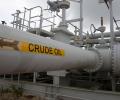
The government has cut windfall profit tax on export of diesel and ATF to their lowest while also reducing the levy on domestically-produced crude in line with softening international oil prices, according to an official order. The levy on crude oil produced by companies such as Oil and Natural Gas Corporation (ONGC) has been cut to Rs 4,350 per tonne from Rs 5,050 per tonne, the order dated February 15 said. Crude oil pumped out of the ground and from below the seabed is refined and converted into fuels like petrol, diesel and aviation turbine fuel (ATF).

Airports levy charges such as FTC, infrastructure charge, and into-plane charges on sale of jet fuel. The levy is passed through to airlines, pushing up costs.

An airfare regulatory authority likely soon.
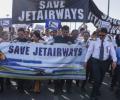
A mix of financial and strategic mistakes combined with poor expectations of the management are the reasons for the downfall of Indian airlines. For Jet, the deathly potion was even more toxic on account of the bitter squabbles between promoter Naresh Goyal and strategic partner Etihad Airways.

With fewer passengers airlines bracing for a rise in operating costs due to a spike in crude prices
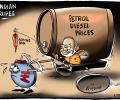
5 commodities namely crude oil, natural gas, petrol, diesel, and aviation turbine fuel (ATF) were kept out of GST's purview given the revenue dependence of state governments on these sectors.

IOC, BPCL and HPCL on Thursday afternoon stopped ATF supplies to Air India at six airports - Kochi, Pune, Patna, Ranchi, Vizag and Mohali - over payment defaults. AI flights from these places were tanking up from other airports.

Sale of wide-body aircraft will not affect internatinal flights, says Jet

There could be rejig at top level at SpiceJet.

The government on Friday cut the windfall profit tax on locally produced crude oil in line with a fall in international rates, and reduced the levy on export of diesel and jet fuel (ATF). At the fifth fortnightly review, the government reduced tax on domestically-produced crude oil to Rs 10,500 per tonne from Rs 13,300 per tonne. The levy on the export of diesel was reduced to Rs 10 per litre from Rs 13.5. Also, the tax on Aviation Turbine Fuel (ATF) exports was cut to Rs 5 a litre from Rs 9 with effect from September 17, according to a finance ministry notification issued late Friday night.

The government has cut windfall gains tax on domestically-produced crude oil to nil while continuing the rate at zero on the export of diesel and ATF. The government has slashed the special additional excise duty (SAED) on crude oil produced by companies such as Oil and Natural Gas Corporation (ONGC) to nil from Rs 4,100 per tonne with effect from Tuesday, an official order dated May 15 said. This is the second time that the levy, which was introduced in July last year in the form of a cess to tax supernormal gains of oil producers and fuel exporters, has been cut to nil for domestically-produced oil.

One reason is that airlines have ramped up capacity and expanded their presence in tier-II markets. The first of a three-part series analyses how the aviation industry is an outlier in the midst of an overall economic slowdown.
Delhi-based low-cost carrier SpiceJet reported a first quarter loss of Rs 129.2 crore from a profit of Rs 18 crore a year earlier.

India, the world's fourth-biggest oil consumer, recently offered Saudi Aramco a stake in refineries and petrochemical projects.

During the January-July period, passenger growth jumped 21.13 per cent to 455.78 lakh.

The market, however, reacted negatively to SpiceJet's announcement and the company's stock dropped by 0.87 per cent as analysts became wary of diversion into a new business during a high fuel price environment.

Jet Airways (India) Ltd hopes to minimise the impact of a sharp rupee depreciation by growing its international network over the next few months.

Failure to reinstate salary even two years after the drastic cuts has landed the airline industry in a massive industrial relation crisis. While employees of Air India had organised a strike back in 2011, it is for the first time that private airlines are facing serious stress related to workers. IndiGo witnessed two of them, back to back. In the first instance, around 50 per cent of the IndiGo flights were delayed as a large number of crew members went on mass sick leave, apparently to participate in a rival airline's walk-in job interview.

The civil aviation ministry appears supportive of SpiceJet because it does not want another airline to fail. The real test now will be the capacity of the airline's chairman, Kalanithi Maran, to raise funds. And he needs to do this quickly.
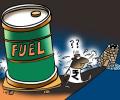
The windfall tax on oil produced within India and fuel exported overseas will make up for more than three-fourths of the revenue that the government lost when it cut excise duty on petrol and diesel to cool soaring inflation, industry sources said. India on July 1 joined a select league of nations globally that have taxed windfall gains accruing to oil companies from soaring energy prices. The government slapped a Rs 6 per litre tax on the export of petrol and jet fuel (ATF) and Rs 13 a litre on the export of diesel effective July 1. Additionally, a Rs 23,250 per tonne tax was levied on crude oil produced domestically.

The domestic aviation industry is expected to report a net loss of Rs 25,000-26,000 crore this fiscal with elevated jet fuel prices and fare caps continuing to pose a major challenge for the airlines' profitability, domestic rating agency ICRA Ltd said on Thursday. The domestic airlines, however, are likely to post a reduced net loss of Rs 14,000-16,000 crore in the next financial year on the back of a "notable recovery" in air passenger traffic and lower level of debt, ICRA said. The ratings agency also estimates that the industry will require an additional funding in the range of Rs 20,000-22,000 crore during FY22-FY24.

Reliance Industries Ltd on Friday reported an 11 per cent drop in its June quarter net profit largely due to weak oil-to-chemical (O2C) vertical and higher interest and depreciation cost. Net profit was Rs 16,011 crore, or Rs 23.66 per share, in April-June - the first quarter of current 2023-24 fiscal year - compared with Rs 17,955 crore, or Rs 26.54 a share, earning a year back, according to a company's stock exchange filing.
The response to the sale has been overwhelming.

Naresh Goyal only gave an undertaking not to sell any of his 51% stake in return for raising working capital debt from PNB.

The airline's accounts are yet to be audited.

Analysts expect holiday fares to inch up further closer to the travel dates, but airlines may still not be able to fully recover higher costs as fuel costs remain elevated
Despite the best ever quarterly net profit of Rs 3,091 crore during April-June of financial year 2023-24 (Q1FY24), challenges are mounting for InterGlobe Aviation-run IndiGo in the near term, said analysts. Given this, most brokerages have retained their ratings from 'buy to underperform', as well as their target price for the stock. For instance, Motilal Oswal Financial Services has retained its 'neutral' rating on the scrip as it believes the low-cost airline is facing teething issues at present.

The airline is not convinced that it will have a sizeable passenger traffic to make wide body operations profitable

The primary and immediate impact of a depreciating rupee is on the importers who will have to shell out more for the same quantity and price. However, it is a boon for the exporters as they receive more rupees in exchange for dollars. The rupee depreciation has wiped away some of the gains that would have accrued to India from international oil and fuel prices dropping to pre-Ukraine war levels.

Rising fuel prices, intense competition and inability to pass on spiralling expenses have been negatively impacting the domestic airlines.
Neil Mills, chief executive, spoke to Business Standard on its strategy and the unprecedented scheme of selling a million tickets at a base price of Rs 1.
Currency depreciation also hits earnings of all domestic carriers

The airline has said it isn't worried about competition in the domestic market, thanks to its spread across three passenger segments
Auditors raise red flags over Jet Air's robust financial status.

This is the first time in the history of the airport operator that revenue crossed Rs 10,000 crore.

These 10 stocks represent the best mix of value and growth, offering relatively low price-to-earnings and price-to-book ratios, a high return on equity, and sufficiently high potential from current levels.

The complaint was lodged by Mumbai-based Express Industry Council of India, which represented major express courier and cargo companies such as DTDC, Aramex India, Blue Dart, DHL Express, GATI and First Flight.

Shares of Mukesh Ambani-owned Reliance Industries Limited (RIL) rose nearly 1 per cent on Tuesday, hitting an intraday high of Rs 2,986.05 per share, after most brokerages reacted positively to the company's March quarter (Q4FY24) results. The bullish outlook stems from Reliance Jio's potential tariff hikes, given the competitive landscape, along with slow but steady improvement in the oil-to-chemical (O2C) vertical.
